

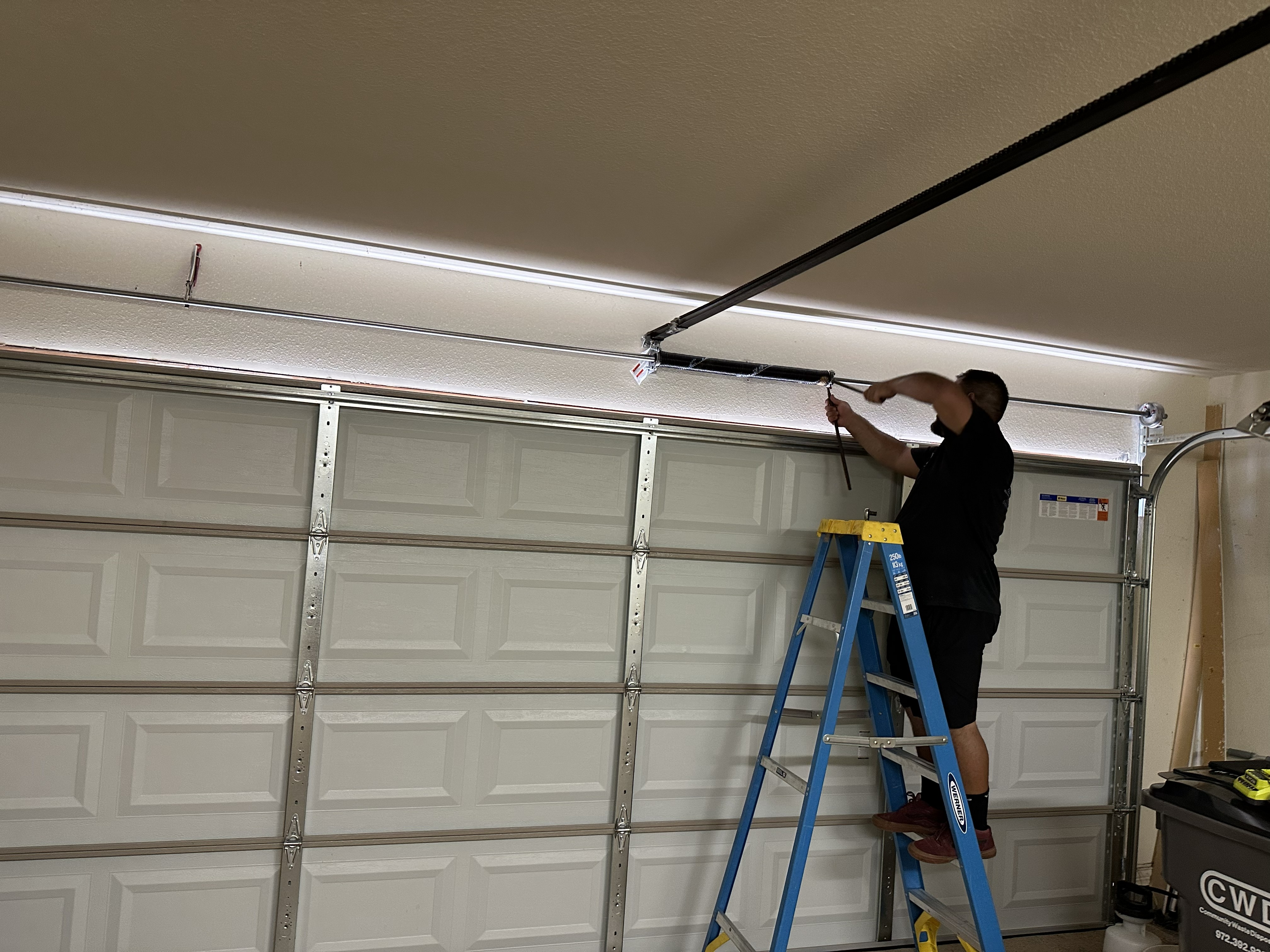
Published by ProLift Garage Doors West Plano | Serving Collin County and North Dallas
When your garage door is not opening the way it should — moving slowly, straining on the way up, reversing unexpectedly, or grinding through every cycle — the instinct is to blame the opener. And sometimes that instinct is right. But more often than not, the opener is simply the loudest symptom of a quieter, far more fundamental problem: weakening torsion springs.
Jumping straight to garage door opener replacement without first diagnosing the spring system is one of the most expensive mistakes a homeowner or commercial property manager can make. At ProLift Garage Doors West Plano, we see it regularly across Allen, Frisco, McKinney, Plano, Prosper, and the surrounding communities we serve — and we’re here to help you get it right the first time.
How Your Garage Door System Actually Works
Your garage door weighs anywhere from 130 to over 400 pounds depending on size and material. The torsion spring mounted above your door is engineered to counterbalance nearly all of that weight, so your opener only needs to manage 5 to 10 pounds of resistance per cycle.
When the springs are properly tensioned and the door is balanced, your opener works comfortably within its design limits and achieves its full garage door opener lifespan of 10 to 15 years. When springs weaken — and they always do over time — the opener is suddenly forced to do what it was never designed to do: lift the full weight of the door on its own.
Industry data shows that a failing spring system forces the opener motor to work against 200 to 300 pounds of resistance instead of the 5 to 10 pounds it was designed for. That’s 20 to 60 times the intended load on every single cycle. The motor overheats. The gears strip. The drive belt or chain wears through. And eventually the opener fails — not because it was defective, but because it was left to do the spring’s job.
The Analogy That Says It All: New Tires, No Wheel Alignment
Here’s the clearest way to understand what happens when you replace a garage door opener without correcting the spring system first:
It’s exactly like buying a brand-new set of tires — but skipping the wheel alignment.
The tires look great rolling out of the shop. But because the wheels are pulling at the wrong angles, the rubber wears unevenly from day one. According to a Bridgestone study, a misalignment of just 0.17 inches — barely visible to the eye — can reduce tire life by up to 25%. Moderate to severe misalignment can cut tire longevity by 50% or more, turning a 60,000-mile investment into a 30,000-mile disappointment.
The root cause was never the tires. The root cause was the alignment. And because nobody fixed the alignment, the new tires paid the price.
Your garage door system works exactly the same way. The opener is the tires. The springs are the alignment. Install a new opener on a door with weak springs, and you’ve just put fresh rubber on a misaligned car. That brand-new opener will be working harder than it was designed for from day one — and its expected garage door opener lifespan will shrink, potentially cut in half, until it fails prematurely.
And just like the tires, the opener will look like the problem. But it never was.
How to Tell If You Need Garage Door Spring Repair — Or an Opener Replacement
Garage door spring repair and opener failure share many of the same symptoms, which is exactly why a professional assessment matters before committing to garage door opener replacement. Here’s what to look for:
Signs Pointing to Garage Door Spring Repair First:
- Your garage door is not opening or feels unusually heavy. Disconnect the opener and lift the door manually to waist height, then let go. This simple garage door balance test tells you a great deal: a properly balanced door stays put or rises slightly on its own. If it drops, your springs are losing tension — and your opener is absorbing strain it was never built to handle.
- The opener strains, groans, or moves the door slowly. The motor is overworking because the springs aren’t carrying the load they should.
- The door reverses unexpectedly mid-cycle. Modern openers use force sensors to detect abnormal resistance — when springs are weak, the excess load triggers a safety reversal as if an obstruction were in the way.
- One side rises faster than the other. Uneven spring tension throws the door off balance and accelerates wear on both the hardware and the opener motor.
- You hear squeaking, popping, or grinding during operation. Metal fatigue in aging springs produces noise well before a full break. Don’t wait.
- A visible gap appears in the spring coil. A broken spring often shows a clear separation in the coil. Stop using the door immediately and call for garage door spring repair — this is a safety emergency.
Signs Pointing to a Genuine Opener Issue:
- The door passes the manual garage door balance test, but the opener fails to respond to remotes, clicks without engaging, or flashes error codes.
- The logic board is malfunctioning regardless of door weight.
- The opener is 12–15+ years old and at the natural end of its garage door opener lifespan.
- Motor capacitors or drive components have failed independent of any spring or load issue.
The safest approach: always perform a garage door balance test before assuming the opener is at fault.
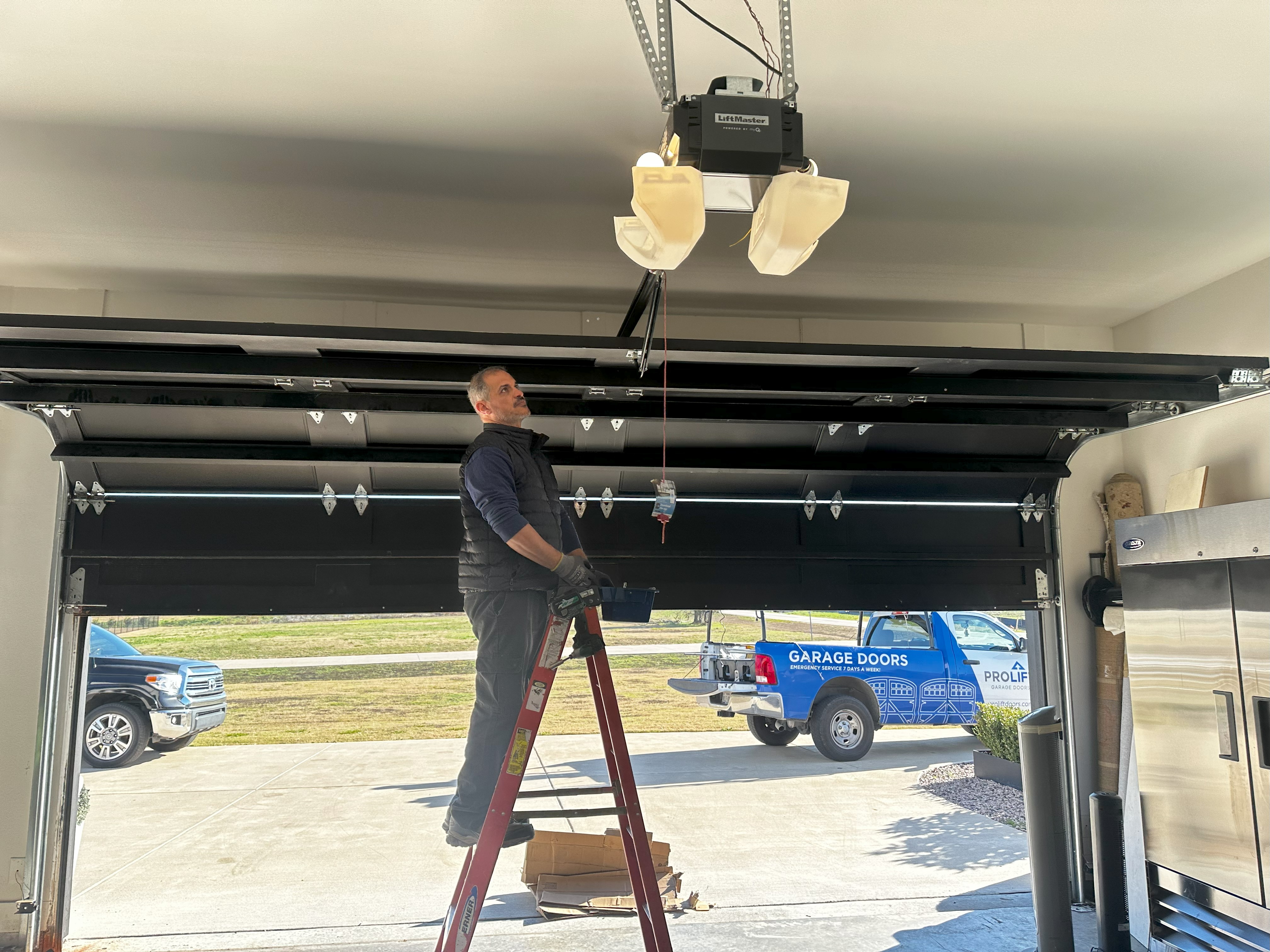
What Wears Springs Out — and Why Collin County Homeowners Should Pay Attention
Most residential garage doors come equipped with springs rated for approximately 10,000 cycles — roughly 7 to 10 years of use for an average household. High-cycle springs, which ProLift installs with a 10-year warranty, extend that life significantly. But regardless of rating, springs weaken gradually before they break, and that gradual weakening is when the hidden damage to your opener begins.
Key factors that accelerate spring wear in the North Texas region:
- Temperature extremes — Collin County summers and periodic freezes cause metal expansion and contraction that fatigues spring coils over time.
- Rust and corrosion — Humidity and moisture attack unprotected spring coils, reducing elasticity and increasing snap risk.
- Lack of lubrication — Dry springs generate friction and heat with every cycle, wearing through their rated life ahead of schedule.
- High-frequency use — Homes with multiple drivers, or commercial doors cycling dozens of times per day, exhaust spring ratings far faster than the average timeline suggests.
Routine garage door maintenance — professional lubrication, balance checks, and spring inspections on a quarterly or annual schedule — is the most cost-effective way to catch spring wear early and protect your opener from carrying a load it was never meant to bear.
Commercial Garage Door Repair: The Chain Hoist Trap
This problem doesn’t stop at the residential driveway. If you manage a warehouse, auto shop, school facility, multi-tenant commercial property, or municipal building, the same principle applies — and the financial stakes are considerably higher.
Heavy commercial overhead doors can weigh 400 to 800 pounds or more. The commercial torsion spring system is what makes those doors manageable for the chain hoist or motorized operator. When commercial springs begin failing, the operator absorbs the excess load cycle after cycle.
The result: facility managers and property teams find themselves ordering commercial garage door repair or full chain hoist replacement — spending $800 to $2,500 or more per unit — when the actual root cause was failing springs that could have been addressed at a fraction of that cost. The new operator gets installed. The springs remain weak. And the premature replacement cycle starts all over again.
At ProLift Garage Doors West Plano, we perform comprehensive commercial assessments specifically to determine whether an operator is failing on its own merits — or because the spring system beneath it has deteriorated. Addressing the springs first and evaluating the operator’s remaining service life regularly saves commercial clients thousands of dollars per door, multiplied across an entire fleet.
Why an Honest Assessment Protects Your Investment
ProLift Garage Doors West Plano was built on a straightforward philosophy: educate first, then recommend only what’s right for your specific situation — and never sell what you don’t need.
As a veteran-owned business with IDEA-certified technicians and a BBB A rating, our team is trained to assess your entire garage door system — not just the part making noise. Every visit includes:
- Spring tension and remaining cycle life assessment
- Garage door balance test and travel alignment check
- Opener load performance and motor health evaluation
- Cable, roller, and hardware wear inspection
- Safety sensor calibration and auto-reversal testing
That complete picture tells us whether you need garage door spring replacement, garage door opener replacement, routine garage door maintenance, or simply a professional lubrication and tune-up. You receive a transparent assessment with clear options and honest pricing — no pressure, no unnecessary work.
Our Preventive Maintenance Program ($15/door/month for residential, with discounts for commercial properties with 10+ doors) keeps your entire system professionally monitored on a quarterly schedule. We track spring cycle life, catch worn components before they become failures, and alert you before a problem escalates — so no broken spring catches you off guard, and no premature opener replacement costs you money that better garage door maintenance would have saved.
Don’t Replace the Tires Without Fixing the Alignment
A quality garage door opener is a genuine investment. Give it the conditions it was designed to operate in — a balanced door, healthy springs, and professional routine maintenance — and it will deliver 10 to 15 years of reliable service.
Skip the spring assessment, and you may find yourself shopping for a second opener far sooner than you planned. The tires don’t fail because they’re bad. They fail because the alignment was never fixed.
ProLift Garage Doors West Plano is here to give you an honest, complete evaluation of your residential or commercial garage door system — so you spend only on what you actually need, and you get the full service life out of every component.
Schedule Your Garage Door Assessment Today
Whether you’re a homeowner in Plano dealing with a sluggish opener, a property manager in Frisco facing repeated commercial door issues, or a business owner in Allen trying to prevent costly downtime — ProLift is ready to help.
We provide residential garage door spring repair, garage door spring replacement, opener service, full system replacements, and commercial garage door repair across Collin County and the surrounding North Dallas area.
Call or text us today:
- (469) 777-8920
- (469) 888-6021
Garage door repair in Plano TX | Garage door repair in Allen TX | Garage door repair in Frisco TXAlso serving: McKinney | Prosper | Anna | Melissa | Collin County, Denton County | Rockwall County, North Dallas
ProLift Garage Doors West Plano — Veteran-owned. IDA-certified. BBB A-rated. No service call fees. Same-day appointments available.
We don’t just fix doors. We protect your investment.